

Jax State’s Andrea Taylor Named Google Certified Innovator
08/25/2026
By Brett Buckner
Andrea Taylor, the Alabama Technology in Motion specialist at Jacksonville State University’s College of Education and Professional Studies, was selected as a Google Certified Innovator, a distinction earned by only 3,307 educators across 67 cohorts in the program’s 20‑year history.
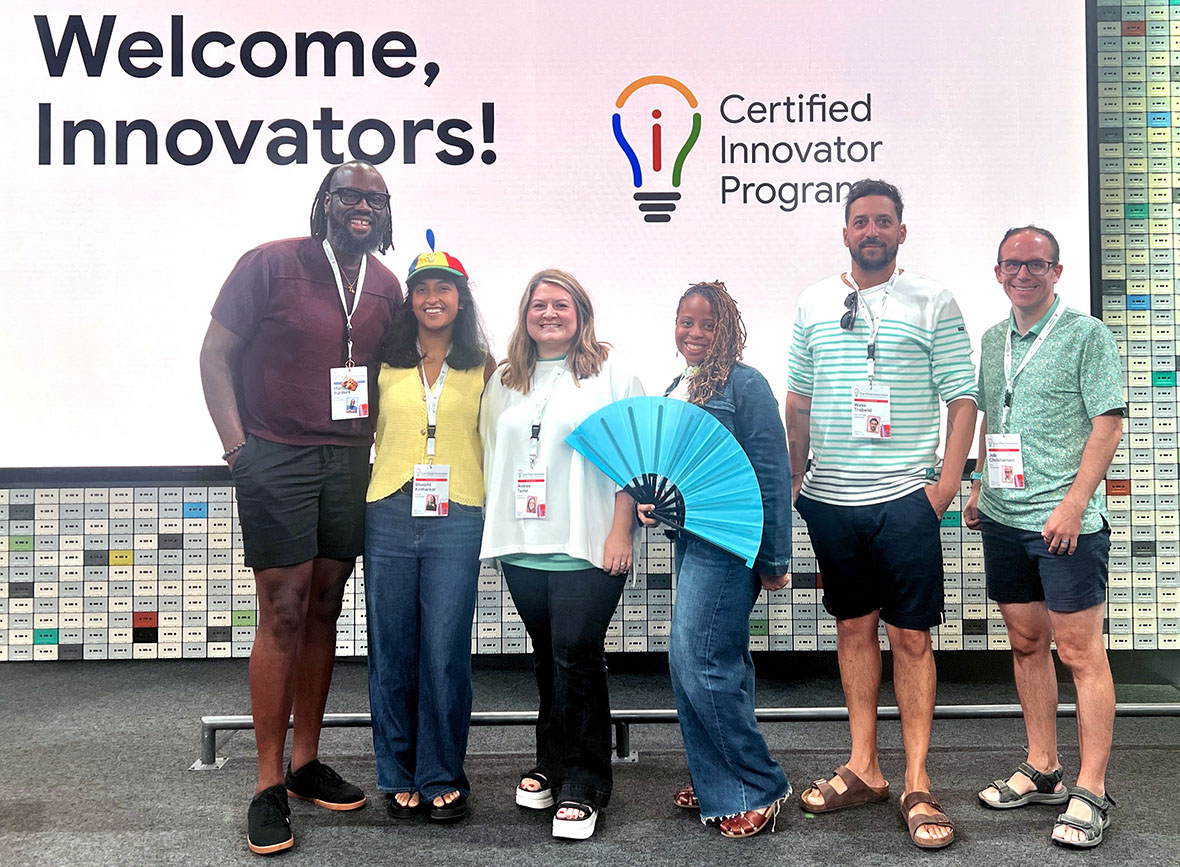
Taylor was one of 35 educators worldwide invited to Atlanta for Google’s intensive, design‑focused Innovation Academy. It was an experience that encouraged her to rethink how schools can better prepare students for what is becoming an inevitable, AI‑driven future.
To address this challenge, Taylor is developing a new platform called the Multimodal Outline Builder (MOB), a tool designed to help students maintain ownership of their writing while still benefiting from AI.
“Think about a student who can talk your ear off about any topic, but the second they have to organize a topic into a formal essay, anxiety sets in,” Taylor said. “MOB allows students to simply dump their raw handwritten doodles, voice recordings, and notes into the app along with the teacher’s prompt and selected writing style.”
The platform analyzes these “chaotic notes” and returns two customized outline options students can use to begin drafting in a Google document. The goal is not for AI to write for students, but to help students structure their own ideas.
“It allows students to have ownership of their writing,” Taylor said, “and bypass the urge to let AI write it for them.”
In Atlanta, Taylor worked directly with Google mentors to code her prototype and bring MOB to life. She will continue to meet monthly with a Google for Education mentor until July 2027, though she knows that development of the platform may take longer.
“Some previous innovators spoke to our group about how it took anywhere from two to four years,” Taylor said. “But Google is in it for the long haul, helping its innovators through the process and getting the final prototype published and usable.”
The Innovation Academy also reshaped how Taylor approaches professional development.
“Participating in this process has given me new ideas for making professional development sessions more engaging, collaborative, and meaningful by incorporating the design thinking process,” she said. “Rather than simply presenting teachers with information or tools, I can guide them through identifying authentic challenges, developing creative solutions, testing their ideas, and reflecting on the results.”
Perhaps most importantly, the experience opened new possibilities for involving students directly.
“I envision facilitating design challenges in which educators and students work together to solve real problems within their schools and communities,” Taylor said. “This would allow me to connect technology, curriculum, creativity, and workforce-ready skills in an authentic way.”
Taylor’s journey to the program began two years ago, when she set her sights on becoming a Google Innovator. She officially applied in March 2026, but only after she felt confident she had built the expertise necessary to contribute meaningfully.
“It took time for me to feel like I had enough experience as an educator using the Google for Education suite of products,” she said, “and providing professional learning for educators with these tools before I felt ready to actually submit my application.”
That experience has also shaped Taylor’s perspective on one of the most pressing issues she sees in classrooms today: the widespread fear surrounding AI, particularly when it comes to student use.
“In many schools,” she explained, “AI is viewed primarily as a threat rather than a tool.”
School policies often ban or heavily restrict AI, driven by concerns about cheating, academic integrity and the overwhelming pace of technological change. Taylor understands the hesitation but said the result can create a climate in which “avoidance feels safer than engagement.”
“Over the past three years in my role, the dominant message has been to limit AI training to adults only,” Taylor continued. “Professional development has focused on helping teachers and administrators understand AI tools for their own productivity or planning. As a result, AI has become something that happens behind the scenes rather than within the learning process itself.”
Students, meanwhile, know AI exists but are often unsure how to use it ethically and effectively.
“What makes this challenge especially urgent is that students are already encountering AI outside of school,” she said. “They are using AI-powered tools in social media, gaming, search engines, and everyday digital experiences.”
When schools ignore that reality, Taylor warned, education risks feeling outdated. Students miss opportunities to develop critical-thinking skills around tools that will shape their careers and civic lives.
“Personally, I believe that avoiding AI does not protect students,” she said. “It leaves them unprepared. The longer we delay addressing student use of AI, the more difficult it becomes to catch up.”