

Jax State Researcher Receives National Grant to Advance Childhood Cancer Research
07/23/2026
St. Baldrick's Foundation awards more than $73,000 to support Dr. Le Su's research into aggressive pediatric sarcomas.
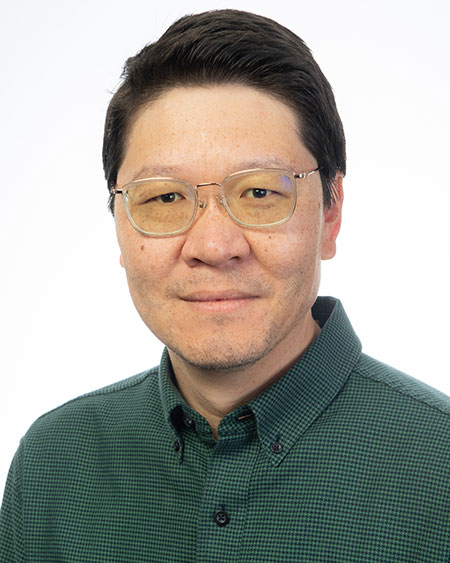 JACKSONVILLE — Jacksonville State University Assistant Professor of Biology Dr. Le Su has been awarded a $73,003.37 Extended Scholar Grant from the St. Baldrick’s Childhood Cancer Research Foundation to advance research aimed at understanding and treating aggressive childhood cancers.
The one-year award, which runs from July 1, 2026, through June 30, 2027, will support Dr. Su's investigation into CIC-DUX4 sarcoma (CDS), a rare and aggressive soft tissue cancer that affects children and young adults.
The grant, titled "Biology and Treatment of CIC-DUX4 Fusion-Driven Sarcoma," will support Dr. Su as he and his laboratory continue studying how genetic abnormalities contribute to tumor development while exploring new therapeutic approaches that could improve outcomes for young patients.
"This highly competitive award reflects both the quality and significance of Dr. Su's research," said Dr. Christie Shelton, Provost and Executive Vice President for Academic Affairs. "At Jax State, we are committed to supporting faculty whose research addresses real-world challenges while providing our students with opportunities to participate in meaningful discovery. Dr. Su's work is an outstanding example of that mission in action."
The St. Baldrick's Childhood Cancer Research Foundation is the largest charity funder of childhood cancer research grants in the U.S., and its grants are among the most competitive in the field. Hundreds of grant proposals are submitted each year, but only a select number receive funding. . Dr. Su has received three St. Baldrick's grants between 2016 and 2027 and is the first and only St. Baldrick's grant recipient from Jax State. Receiving a St. Baldrick's Scholar award is widely regarded as one of the highest career achievements in childhood cancer research.
Dr. Su's research focuses on understanding why CIC-DUX4 sarcoma is so aggressive and identifying new ways to treat the disease. Approximately 60 percent of CDS patients experience metastasis in the brain and lungs, and the average lifespan after diagnosis is less than two years. At present, truly effective therapies do not exist.
"The disease we choose to study is called CIC-DUX4 sarcoma (or CDS), a deadly soft tissue cancer in children and young adults,” said Dr. Su. “Approximately 60% of CDS patients have metastasis in the brain and lungs, and the average lifespan after diagnosis is less than two years. At present, truly effective therapies do not exist. My research program is designed to serve a two-fold purpose: first, to find the genes essential for CDS cell survival and create a molecular roadmap of how they work together to support cancer development; second, to find CDS's vulnerabilities (somehow like the crossroads) on the map and use FDA-approved anti-cancer compounds (like installing the STOP sign) to treat CDS. Ultimately, this type of knowledge can be translated into clinical trials for CDS patients.”
Since joining Jax State in 2022, Dr. Su has established a research program focused on understanding the molecular and cellular basis of childhood sarcomas and developing targeted therapies for these aggressive diseases. He earned his doctorate in Cell Biology from the University of British Columbia before being appointed a Junior Fellow at the HudsonAlpha Institute for Biotechnology, where he launched his independent research laboratory immediately following graduate school.
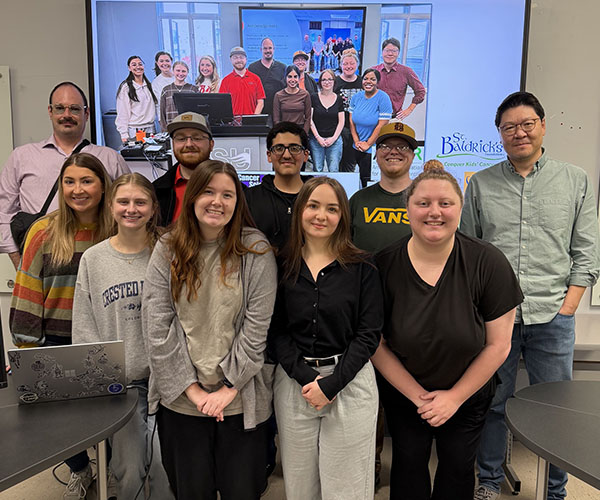 His contributions to cancer research have been recognized with grants and awards from the St. Baldrick's Foundation, the Sarcoma Foundation of America, the U.S. Department of Defense, and the American Association for Cancer Research.
“I am fortunate to work with outstanding undergraduate and graduate students, and this recognition belongs to them as much as it does to me,” Dr. Su said. “Their hard work and dedication continue to move our research forward.
"Childhood cancer receives merely 4% of all federal cancer research funding in the US. This may be the reason why treatments for childhood cancer have significantly lagged behind many adult cancers. Thus, the funding from St. Baldrick's Foundation has an extraordinary impact on my sarcoma work, as well as many other childhood cancer researchers worldwide. Personally, this award will allow me to introduce top-tier cancer research into the classroom where both undergraduate and graduate students could use their textbook knowledge to solve real-world problems on cancer therapy. Hopefully, many of the students will not only benefit from but also continue studying childhood cancer biology as next-generation researchers/educators in the field."
The St. Baldrick's Foundation supports investigators around the world who are working to improve treatments and find cures for pediatric cancers.