

Nursing students gain global perspective through study abroad experience in Guatemala
08/07/2026

By Brett Buckner
Compassion doesn’t require speaking the same language. A smile, a helping hand, and simple kindness – spoken or unspoken - can make a lasting impact. That's the lesson 10 Jacksonville State University nursing students carried home from a recent study abroad experience in Guatemala.
Led by Assistant Professor of Nursing Dr. Danyel Munster, the students spent nine days serving communities with limited access to healthcare while gaining firsthand experience that no classroom could fully replicate.
For 22-year-old Lola Walk of Guntersville, the experience changed her perspective on nursing.
“Their gratitude reminded me that compassionate care goes far beyond spoken language,” she said.
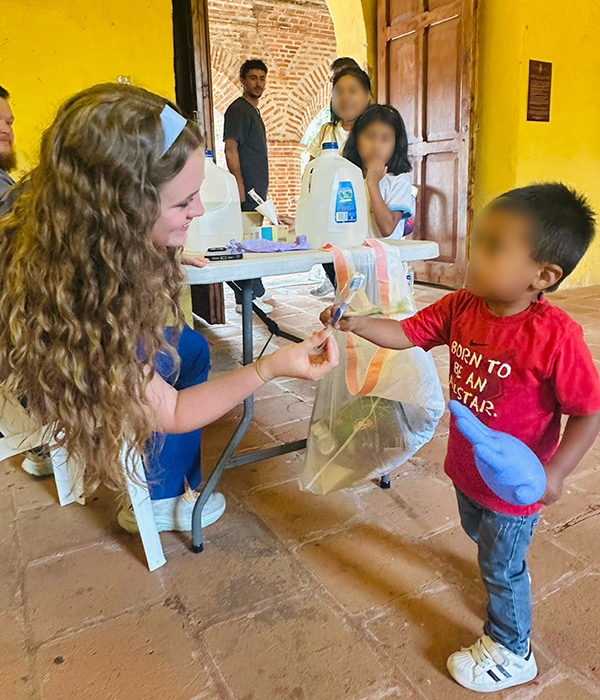 During the group’s nine days in Central America, Walk and her fellow students witnessed what rural healthcare truly looks like for impoverished areas. Textbooks can’t fully describe the disparities.
“In Guatemala, we met families who didn’t have access to clean water, routine medical care, or treatment for chronic illnesses,” she said. “Many of the conditions we saw could have been prevented or managed with regular healthcare access.”
Students worked alongside healthcare providers, assisting with patient assessments, medication distribution, health education, and other basic clinical interventions that made a meaningful difference for the patients they served.
“Seeing the gratitude on their faces through smiles, hugs, and a simple ‘gracias’ reminded me why I chose nursing,” Walk said. “It reinforced that nursing is about treating people with compassion, empathy, and dignity, regardless of where they live or what resources they have.”
The study abroad experience was supported in part by the "Gamecocks in Guatemala" initiative of the JSU Foundation. Alumni and supporters donated to make this once-in-a-lifetime experience a reality.
Dr. Tracey D. Matthews, dean of the College of Health Professions and Wellness, said the experience prepares students for the realities of modern healthcare.
“The experiences our students gained in Guatemala will influence the way they practice nursing for years to come,” Dr. Matthews said. “Through caring for patients in resource-limited settings, they developed resilience, strengthened their cultural competence, and gained a deeper appreciation for the universal language of compassion. This opportunity reflects the School of Nursing’s mission to empower exemplary nurses to care for anyone, anytime, anywhere, while preparing graduates to meet the healthcare needs of vulnerable populations with excellence and empathy.”
The group returned on May 29 with a renewed understanding of global healthcare and a sharpened awareness of the challenges many patients face both abroad and in the United States.
Students traveled to villages where running water was scarce and medical care was difficult to access. In one community, they provided care to more than 50 families in a single day, offering basic healthcare services that many residents rarely receive.
“The students came back saying they have a much better understanding of how to care for different patient populations, especially those without health insurance or those who speak a different language,” Dr. Munster said. “The experience empowered them to care for anyone, anytime, anywhere.”
Watching the students navigate unfamiliar environments was one of the most rewarding parts of the trip.
“It was important for the students to step outside their comfort zones,” she said. “That’s where real growth happens. They faced a lot of challenges on the trip, but I got to see them work through those moments and gain confidence along the way.”
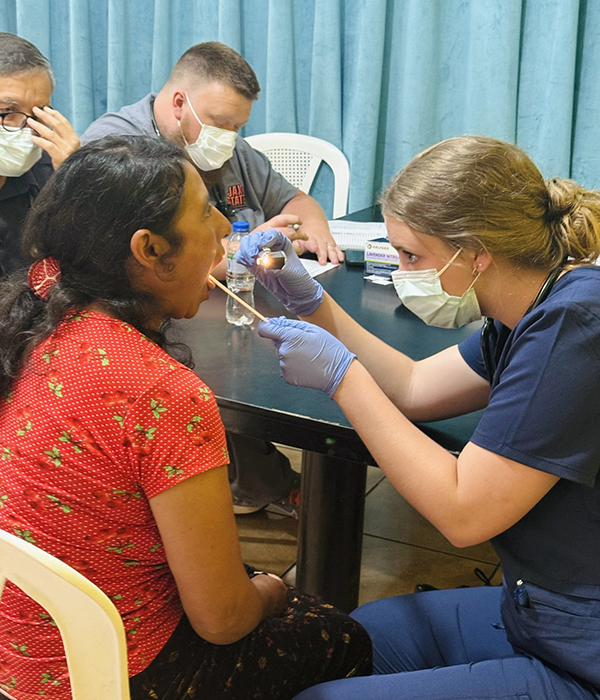 Nursing is a demanding field, and Dr. Munster believes the resilience students built in Guatemala will follow them into their careers.
“It was powerful to see the difference they made,” she said, “but also to watch the students grow through that experience.”
For senior Harrison Millander, the trip was a chance to connect with people beyond a classroom or hospital.
“I was extremely excited about learning a new culture and being open‑minded to speaking a new language, trying new foods, and helping new people in any way possible,” said the 22-year-old from Hokes Bluff.
Millander wanted to see what life looked like for families who rarely had access to healthcare.
“I was curious about going on our clinical trips to the non‑tourist areas of Guatemala and seeing how everyone lives and needed help the most,” he said. “Seeing how welcoming everyone was and how appreciative they were for our help and guidance really made the trip worth it, and I would do it again 100 times.”
For Millander, some of the most memorable moments came not from the clinics, but from walking through local communities with classmates, speaking Spanish with residents and celebrating his birthday while in Guatemala.
“I think being surrounded by good people and interacting with new people makes anything worth it,” he said.
Healthcare in Guatemala is technically free, but access is often limited because the system is underfunded and resources are scarce.
“Although the healthcare is free, it was very underfunded and relies heavily on donations,” Millander said. “In America it can be quite easy to just run to a clinic real quick for a sore throat, but in Guatemala sometimes they can go months without seeing a healthcare professional.”
For Walk, most of her clinical experience had taken place in Alabama’s larger cities, where hospitals, providers, and insurance networks were readily available. Guatemala offered a stark contrast.
“I knew the areas we would be serving had little to no access to healthcare,” she said, “and I wanted to use the knowledge and skills I had been learning in nursing school to help care for the families who needed it most.”
She expected challenges, language barriers, limited supplies, and an unfamiliar environment, but those concerns quickly faded.
“Kindness, compassion, and gratitude didn’t require words,” Walk said. “We had incredible translators who helped us communicate, and the doctors on site were so patient and willing to teach us throughout the experience.”
The experience also reinforced for Walk that there is no single right way to care for patients. Effective nursing requires cultural understanding, adaptability and humility.
“Nursing is a universal language of compassion,” Walk said. “No matter where you are in the world, every patient wants to feel heard, respected, and cared for.”
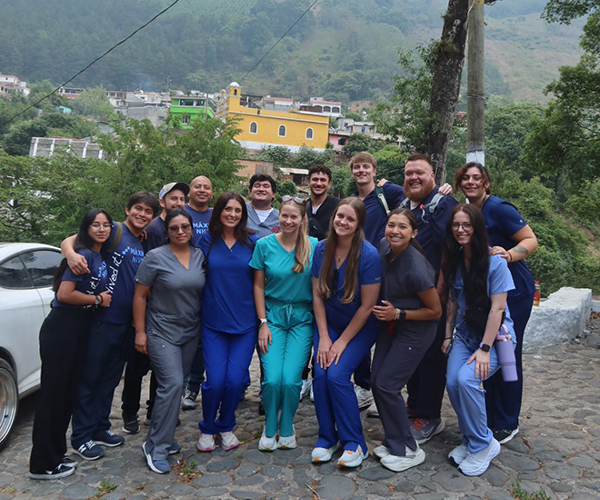 Dr. Munster said the trip would not have been possible without widespread support.
“We’re very thankful for everyone who supported the effort,” she said. “Our administration fully supported us, and I am extremely grateful for the opportunity to have been able to support our students in Guatemala.”
Walk left Guatemala feeling like she had made a difference but soon realized the people she met had made an even greater difference in her.
“They reminded me that healthcare is ultimately about serving others with humility, kindness, and love,” she said. “That’s the kind of nurse I hope to be every day,” she said.
Millander encouraged students from all academic disciplines to consider studying abroad.
“There is a whole world out there that can use your help and give you help,” he said. “Sometimes we may get in a little bubble with ourselves, but by going on that trip, I made lifelong friendships and was given the best opportunity of my life.”